

on this page
Mulch Your Interiors!
- Shop Now
There's a moment every plantscaper, interior designer, and plant-obsessed homeowner knows well: the plant is perfect, the pot is perfect — and then you look down at the soil line and something just feels unfinished.
That's the problem interior mulch solves.
Interior mulch is the finishing layer that sits on top of your planter's growing medium, transforming a raw soil surface into a polished, professional, presentation-ready installation. It's the difference between a plant that looks placed and a plant that looks designed.
In this guide, we'll cover everything you need to know about interior mulch — what it is, why it matters, how it differs from outdoor mulch, how to apply it, and who it's for. Whether you're a commercial plantscaper finishing a hotel lobby installation or a home enthusiast upgrading your living room planter game, this is your complete starting point.
What Is
Interior Mulch?
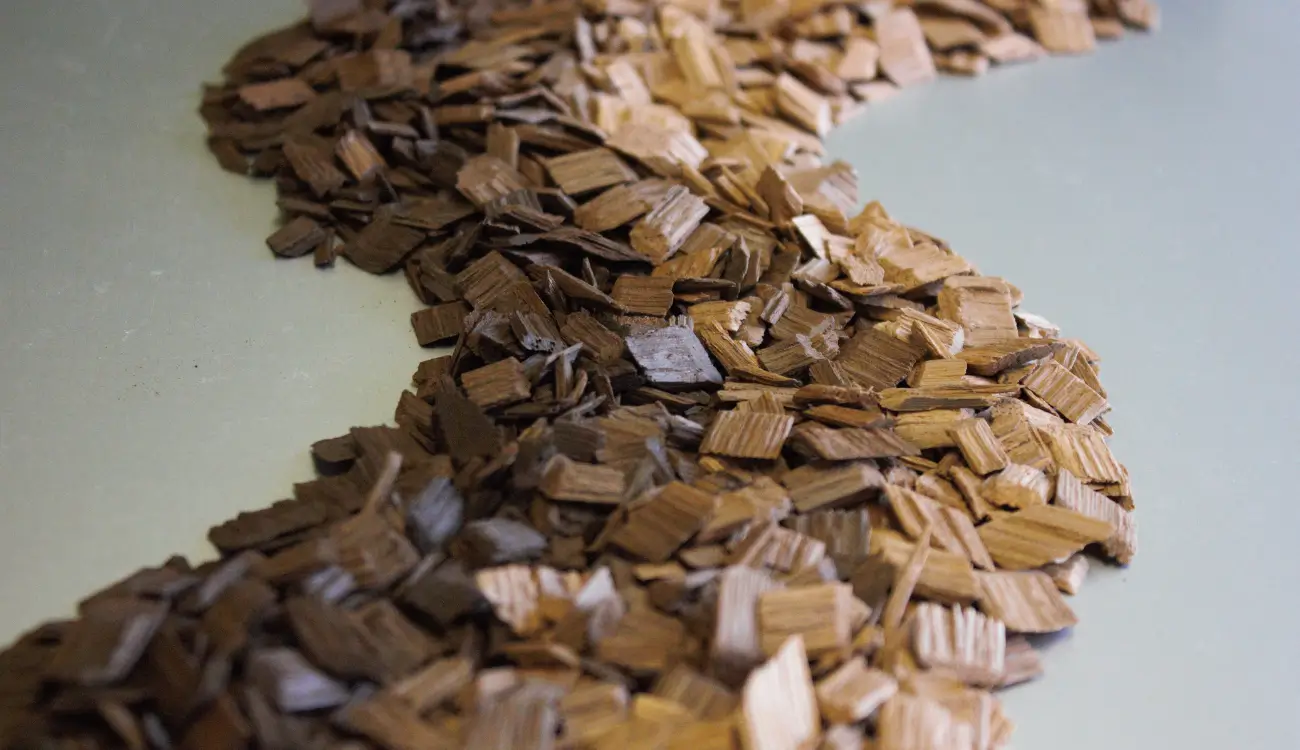
Interior mulch is a decorative topdressing material specifically designed for use in indoor planters. It sits on top of the growing medium—whether soil, coco coir, or a soilless mix—and creates a clean, finished surface layer.
Unlike outdoor mulch, which is engineered for moisture retention, weed suppression, and decomposition into garden beds, interior mulch is engineered for appearance, cleanliness, and indoor performance. It doesn't crumble, doesn't mold under normal indoor conditions, doesn't carry insects, and doesn't produce the earthy odor that bark-based outdoor products often do when used in enclosed spaces.
Interior mulch comes in a range of textures, colors, and finishes—from natural warm tones to cooler neutrals—designed to complement interior color palettes, vessel styles, and the plants themselves.
Why Interior Mulch Matters
Ask any professional plantscaper what separates a good installation from a great one, and the answer almost always comes back to the details at the soil line. Plants can be perfectly selected, perfectly potted, and perfectly positioned, but if the top of the planter looks like a bag of garden soil was dumped in and left, the whole effect is undermined.
Interior mulch is the detail that closes the loop. It:
- Creates a uniform, polished surface across all planters in a space.
- Hides irrigation lines, soil amendments, and pot mechanics that you don't want visible in your interiorscape.
- Reads as intentional design rather than just maintenance.
- Photographs beautifully—critical for hotels, showrooms, and any space where the interior is documented or marketed.
- Extends the visual life of an installation between maintenance visits.
Additionally, for commercial plantscaping companies, interior mulch isn't just aesthetic—it's a deliverable. Clients paying for premium plantscaping expect a finished result. Interior mulch is how you deliver that finish consistently, at scale, across every planter in the job.
Research consistently shows that biophilic design elements like plants, natural textures, living walls, etc., improve employee wellbeing, reduce stress, and increase productivity in commercial environments. When the plant installation looks unpolished, it undercuts the premium positioning of the entire design decision.
Interior Mulch vs. Outdoor Mulch
This is one of the most common questions we get—and the answer matters more than most people expect.
Outdoor mulch is designed for outdoor conditions. It's meant to absorb rain, decompose slowly into garden beds, suppress weeds in open-air environments, and handle temperature swings. Those properties are features outdoors. Indoors, they become problems.
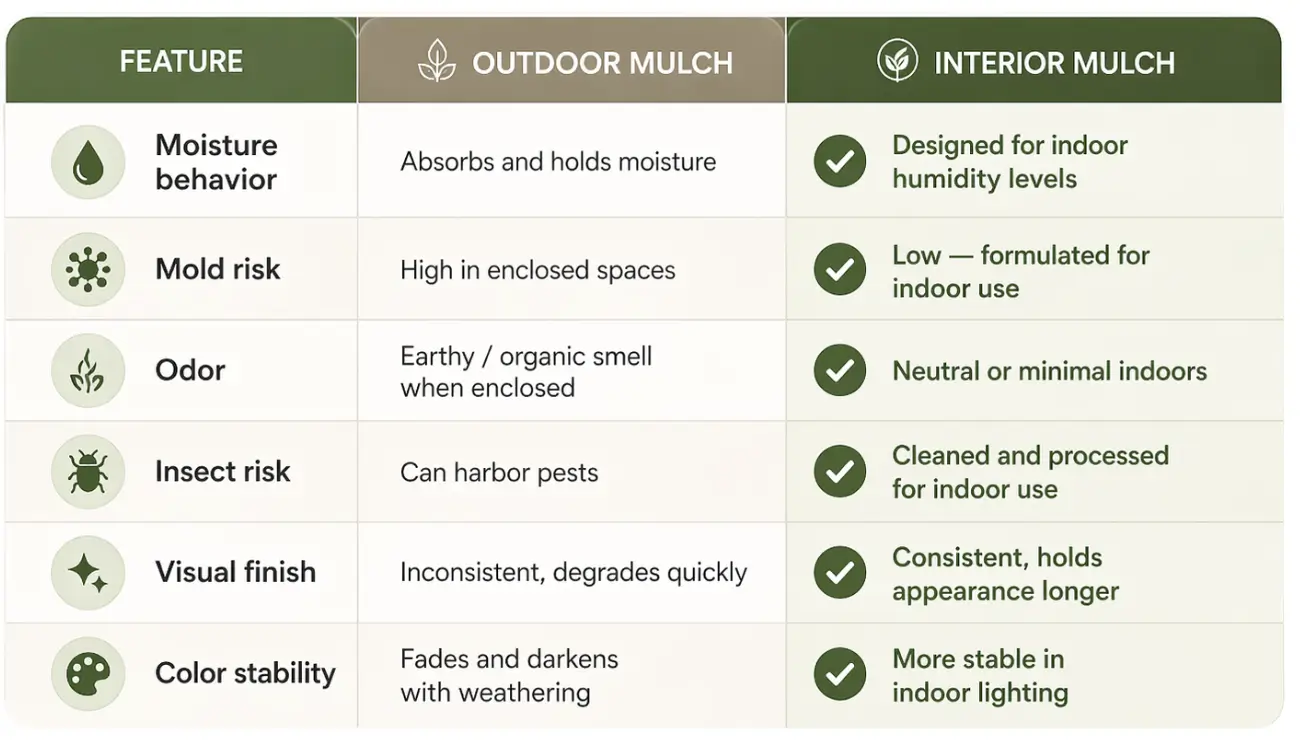
The short version: outdoor mulch belongs outside. Using bark chips, garden mulch, or shredded wood in an indoor planter will almost always result in mold growth, odor issues, and a degraded appearance within weeks in a climate-controlled environment.
The short version: outdoor mulch belongs outside. Using bark chips, garden mulch, or shredded wood in an indoor planter will almost always result in mold growth, odor issues, and a degraded appearance within weeks in a climate-controlled environment.
Types of
interior mulch
Interior mulch isn't one-size-fits-all. The right choice depends on your space, your planter, your plant, and the aesthetic you're going for.
By Color & Finish
- Warm natural tones — amber, honey, and tan finishes that complement terracotta, wood, and warm-toned interiors.
- Cool neutrals — lighter, more bleached finishes that work with white, grey, and modern minimalist spaces.
- Dark rich tones — near-black or deep brown finishes that create high contrast and read as premium in dark vessel settings.
By Texture
- Fine-grain — cleaner look, sits flat, works well in smaller or more refined planters.
- Medium-grain — the workhorse finish, works across most planter sizes and styles.
- Coarse/chunky — more organic look, works well in large floor planters and statement installations.
The right finish is always a function of the planter, the plant, and the room. A hotel lobby with dark marble floors and matte black planters calls for a different finish than a bright co-working space with white concrete pots.
how to apply interior mulch
Applying interior mulch correctly takes about five minutes and makes a significant visual difference. Here's the standard process:
1. Prepare your planter — make sure your plant is potted, watered, and settled before applying the topdressing layer.
2. Clear the soil surface — remove any debris, old topdressing, or loose material from the top of the growing medium.
3. Determine your depth — for most planters, a 1–2 inch layer of interior mulch is sufficient for full coverage and visual effect.
4. Pour and distribute — pour interior mulch around the base of the plant, working outward toward the planter edge.
5. Settle and level — use your hand or a small trowel to create an even surface, keeping mulch away from direct contact with the plant stem.
6. Final check — make sure the planter edge is clean and no mulch is sitting on plant leaves or stems.
Pro Tips for Commercial Installs
When applying interior mulch in a commercial setting, ensure to work consistently across all planters in a space as inconsistent depth or coverage reads as unfinished. Additionally, for large floor planters, a slightly deeper layer (up to 3 inches) gives a more substantial, polished look.
How Much Interior Mulch Do You Need?
Coverage depends on planter size and desired depth. As a general rule:
- Small planters (under 12" diameter) — approximately 0.5–1 lb per planter at 1" depth.
- Medium planters (12"–24" diameter) — approximately 1–3 lbs per planter at 1–2" depth.
- Large floor planters (24"+ diameter) — approximately 3–8 lbs per planter at 2–3" depth.
For commercial projects with multiple planters, always round up—you'll want consistent coverage and a small buffer for touch-ups.
Who uses
Interior Mulch?
Commercial Plantscaping Companies
Professional plantscapers are the heaviest users of interior mulch. It's a standard finishing material on any quality commercial installation and is typically specified alongside the plants and vessels as part of the overall design package.
Hotels and Hospitality
Hotels use interior plantscaping extensively in lobbies, restaurants, corridors, and event spaces. Interior mulch keeps those installations looking sharp between maintenance visits—critical in high-traffic, high-visibility environments.
Corporate Offices and Co-Working Spaces
Office plantscaping has grown significantly as employers invest in biophilic design to improve wellbeing and space quality. Interior mulch is a standard spec item on these projects.
Retail and Shopping Centers
High-end retail environments use plantscaping as part of their brand experience. Interior mulch keeps those installations looking curated and intentio
Home Plant Enthusiasts
On the B2C side, interior mulch has a growing following among plant hobbyists who want their home installations to look as polished as the commercial setups they see on Instagram and TikTok.
Interior Mulch for Commercial vs. Residential Use
The product is the same—the scale and specification process are different.
For commercial use, interior mulch becomes part of a repeatable specification. You're choosing a finish that works across an entire installation — potentially dozens or hundreds of planters — and needs to maintain a consistent appearance across maintenance cycles, seasonal changes, and client walkthroughs.
For residential use, interior mulch is about personal aesthetic. You're choosing a finish that works with your home's color palette and the vessels you've already chosen. Application is simple, quantities are small, and the main decision is color and grain.
Working on a
commercial install?
Our team can help with bulk quantities, spec support, and sample packs for client presentations.
Final Thoughts
Interior mulch is a helpful tool for many interiorscapers across the globe. As you can see from the information above, not only is it specially formatted for indoor use, but it can also help improve the overall look, cleanliness, and function of interior plant displays.
Whether it is used in offices, hotels, shopping centers, restaurants, or other interior environments, interior mulch can play an important role in creating healthier-looking and more visually appealing plant installations. Choosing the right indoor mulch can help interiorscapers deliver a more professional finished product while also supporting the long-term care of the plants they maintain.
FAQ
Q: What is interior mulch made of?
Interior mulch is made from processed and treated natural wood materials, engineered specifically for indoor use. Unlike outdoor mulch, it's cleaned, treated, and finished to perform in climate-controlled environments without molding, crumbling, or producing odor.
Q: Is interior mulch safe for indoor plants?
Yes—interior mulch sits on top of the growing medium and doesn't interfere with root health, watering, or nutrient uptake when applied correctly. It should not be packed tightly against plant stems.
Q: Can I use regular outdoor mulch in indoor planters?
We strongly advise against it. Outdoor mulch is not formulated for enclosed indoor environments and will commonly develop mold, produce odor, and degrade in appearance much faster than interior mulch.
Q: Where can I buy interior mulch?
Interior Mulch Scapes interior mulch is available directly through our online store. We ship nationwide and offer sample pouches for anyone who wants to test before purchasing.
Q: Do you offer bulk pricing for commercial projects?
Yes—we work with plantscaping companies, interior designers, and facilities managers on commercial quantities. Contact us for bulk pricing and spec support.
by Brandon Haas
Published on July 16, 2025
Unsubscribe anytime. By entering your email, you agree to receive marketing emails from Interior Mulch Scapes. By proceeding, you agree to the Terms and Conditions and Privacy Policy.
popular posts
INTERIOR MULCH
Should You Mulch Indoor Plants?
TIPS
How Deep Should Mulch Be?
INTERIOR MULCH
4 Tips to Begin Interior Landscaping
INTERIOR MULCH
What is Interiorscaping?
on this page
Mulch Your Interiors!
- Shop Now
There's a moment every plantscaper, interior designer, and plant-obsessed homeowner knows well: the plant is perfect, the pot is perfect — and then you look down at the soil line and something just feels unfinished.
That's the problem interior mulch solves.
Interior mulch is the finishing layer that sits on top of your planter's growing medium, transforming a raw soil surface into a polished, professional, presentation-ready installation. It's the difference between a plant that looks placed and a plant that looks designed.
In this guide, we'll cover everything you need to know about interior mulch — what it is, why it matters, how it differs from outdoor mulch, how to apply it, and who it's for. Whether you're a commercial plantscaper finishing a hotel lobby installation or a home enthusiast upgrading your living room planter game, this is your complete starting point.
What Is
Interior Mulch?
Interior mulch is a decorative topdressing material specifically designed for use in indoor planters. It sits on top of the growing medium—whether soil, coco coir, or a soilless mix—and creates a clean, finished surface layer.
Unlike outdoor mulch, which is engineered for moisture retention, weed suppression, and decomposition into garden beds, interior mulch is engineered for appearance, cleanliness, and indoor performance. It doesn't crumble, doesn't mold under normal indoor conditions, doesn't carry insects, and doesn't produce the earthy odor that bark-based outdoor products often do when used in enclosed spaces.
Interior mulch comes in a range of textures, colors, and finishes—from natural warm tones to cooler neutrals—designed to complement interior color palettes, vessel styles, and the plants themselves.
Why Interior Mulch Matters
Ask any professional plantscaper what separates a good installation from a great one, and the answer almost always comes back to the details at the soil line. Plants can be perfectly selected, perfectly potted, and perfectly positioned, but if the top of the planter looks like a bag of garden soil was dumped in and left, the whole effect is undermined.
Interior mulch is the detail that closes the loop. It:
- Creates a uniform, polished surface across all planters in a space.
- Hides irrigation lines, soil amendments, and pot mechanics that you don't want visible in your interiorscape.
- Reads as intentional design rather than just maintenance.
- Photographs beautifully—critical for hotels, showrooms, and any space where the interior is documented or marketed.
- Extends the visual life of an installation between maintenance visits.
Additionally, for commercial plantscaping companies, interior mulch isn't just aesthetic—it's a deliverable. Clients paying for premium plantscaping expect a finished result. Interior mulch is how you deliver that finish consistently, at scale, across every planter in the job.
Research consistently shows that biophilic design elements like plants, natural textures, living walls, etc., improve employee wellbeing, reduce stress, and increase productivity in commercial environments. When the plant installation looks unpolished, it undercuts the premium positioning of the entire design decision.
Interior Mulch vs. Outdoor Mulch
This is one of the most common questions we get—and the answer matters more than most people expect.
Outdoor mulch is designed for outdoor conditions. It's meant to absorb rain, decompose slowly into garden beds, suppress weeds in open-air environments, and handle temperature swings. Those properties are features outdoors. Indoors, they become problems.
The short version: outdoor mulch belongs outside. Using bark chips, garden mulch, or shredded wood in an indoor planter will almost always result in mold growth, odor issues, and a degraded appearance within weeks in a climate-controlled environment.
The short version: outdoor mulch belongs outside. Using bark chips, garden mulch, or shredded wood in an indoor planter will almost always result in mold growth, odor issues, and a degraded appearance within weeks in a climate-controlled environment.
Types of
interior mulch
Interior mulch isn't one-size-fits-all. The right choice depends on your space, your planter, your plant, and the aesthetic you're going for.
By Color & Finish
- Warm natural tones — amber, honey, and tan finishes that complement terracotta, wood, and warm-toned interiors.
- Cool neutrals — lighter, more bleached finishes that work with white, grey, and modern minimalist spaces.
- Dark rich tones — near-black or deep brown finishes that create high contrast and read as premium in dark vessel settings.
By Texture
- Fine-grain — cleaner look, sits flat, works well in smaller or more refined planters.
- Medium-grain — the workhorse finish, works across most planter sizes and styles.
- Coarse/chunky — more organic look, works well in large floor planters and statement installations.
The right finish is always a function of the planter, the plant, and the room. A hotel lobby with dark marble floors and matte black planters calls for a different finish than a bright co-working space with white concrete pots.
how to apply interior mulch
Applying interior mulch correctly takes about five minutes and makes a significant visual difference. Here's the standard process:
1. Prepare your planter — make sure your plant is potted, watered, and settled before applying the topdressing layer.
2. Clear the soil surface — remove any debris, old topdressing, or loose material from the top of the growing medium.
3. Determine your depth — for most planters, a 1–2 inch layer of interior mulch is sufficient for full coverage and visual effect.
4. Pour and distribute — pour interior mulch around the base of the plant, working outward toward the planter edge.
5. Settle and level — use your hand or a small trowel to create an even surface, keeping mulch away from direct contact with the plant stem.
6. Final check — make sure the planter edge is clean and no mulch is sitting on plant leaves or stems.
Pro Tips for Commercial Installs
When applying interior mulch in a commercial setting, ensure to work consistently across all planters in a space as inconsistent depth or coverage reads as unfinished. Additionally, for large floor planters, a slightly deeper layer (up to 3 inches) gives a more substantial, polished look.
How Much Interior Mulch Do You Need?
Coverage depends on planter size and desired depth. As a general rule:
- Small planters (under 12" diameter) — approximately 0.5–1 lb per planter at 1" depth.
- Medium planters (12"–24" diameter) — approximately 1–3 lbs per planter at 1–2" depth.
- Large floor planters (24"+ diameter) — approximately 3–8 lbs per planter at 2–3" depth.
For commercial projects with multiple planters, always round up—you'll want consistent coverage and a small buffer for touch-ups.
Who uses
Interior Mulch?
Commercial Plantscaping Companies
Professional plantscapers are the heaviest users of interior mulch. It's a standard finishing material on any quality commercial installation and is typically specified alongside the plants and vessels as part of the overall design package.
Hotels and Hospitality
Hotels use interior plantscaping extensively in lobbies, restaurants, corridors, and event spaces. Interior mulch keeps those installations looking sharp between maintenance visits—critical in high-traffic, high-visibility environments.
Corporate Offices and Co-Working Spaces
Office plantscaping has grown significantly as employers invest in biophilic design to improve wellbeing and space quality. Interior mulch is a standard spec item on these projects.
Retail and Shopping Centers
High-end retail environments use plantscaping as part of their brand experience. Interior mulch keeps those installations looking curated and intentio
Home Plant Enthusiasts
On the B2C side, interior mulch has a growing following among plant hobbyists who want their home installations to look as polished as the commercial setups they see on Instagram and TikTok.
Interior Mulch for Commercial vs. Residential Use
The product is the same—the scale and specification process are different.
For commercial use, interior mulch becomes part of a repeatable specification. You're choosing a finish that works across an entire installation — potentially dozens or hundreds of planters — and needs to maintain a consistent appearance across maintenance cycles, seasonal changes, and client walkthroughs.
For residential use, interior mulch is about personal aesthetic. You're choosing a finish that works with your home's color palette and the vessels you've already chosen. Application is simple, quantities are small, and the main decision is color and grain.
Working on a
commercial install?
Our team can help with bulk quantities, spec support, and sample packs for client presentations.
Final Thoughts
Interior mulch is a helpful tool for many interiorscapers across the globe. As you can see from the information above, not only is it specially formatted for indoor use, but it can also help improve the overall look, cleanliness, and function of interior plant displays.
Whether it is used in offices, hotels, shopping centers, restaurants, or other interior environments, interior mulch can play an important role in creating healthier-looking and more visually appealing plant installations. Choosing the right indoor mulch can help interiorscapers deliver a more professional finished product while also supporting the long-term care of the plants they maintain.
FAQ
Q: What is interior mulch made of?
Interior mulch is made from processed and treated natural wood materials, engineered specifically for indoor use. Unlike outdoor mulch, it's cleaned, treated, and finished to perform in climate-controlled environments without molding, crumbling, or producing odor.
Q: Is interior mulch safe for indoor plants?
Yes—interior mulch sits on top of the growing medium and doesn't interfere with root health, watering, or nutrient uptake when applied correctly. It should not be packed tightly against plant stems.
Q: Can I use regular outdoor mulch in indoor planters?
We strongly advise against it. Outdoor mulch is not formulated for enclosed indoor environments and will commonly develop mold, produce odor, and degrade in appearance much faster than interior mulch.
Q: Where can I buy interior mulch?
Interior Mulch Scapes interior mulch is available directly through our online store. We ship nationwide and offer sample pouches for anyone who wants to test before purchasing.
Q: Do you offer bulk pricing for commercial projects?
Yes—we work with plantscaping companies, interior designers, and facilities managers on commercial quantities. Contact us for bulk pricing and spec support.