

on this page
Mulch Your Interiors!
- Shop Now
This is the question that comes up every time—whether you're a professional plantscaper quoting a commercial install or a home enthusiast standing in front of a planter wondering which bag to grab.
How much mulch do I actually need?
The good news is it's a straightforward calculation once you know two things: the surface area of your planter and how deep you want to apply the mulch. This post gives you the numbers, the formula, and a set of real-world examples so you can walk into any project—one pot or forty planters—knowing exactly what to order.
The Core
Coverage Number
Everything starts here: 1.66 lbs of interior mulch covers 1 square foot at 1 inch depth.
That's your baseline. From that single number you can calculate coverage for any planter shape, any application depth, and any order size.
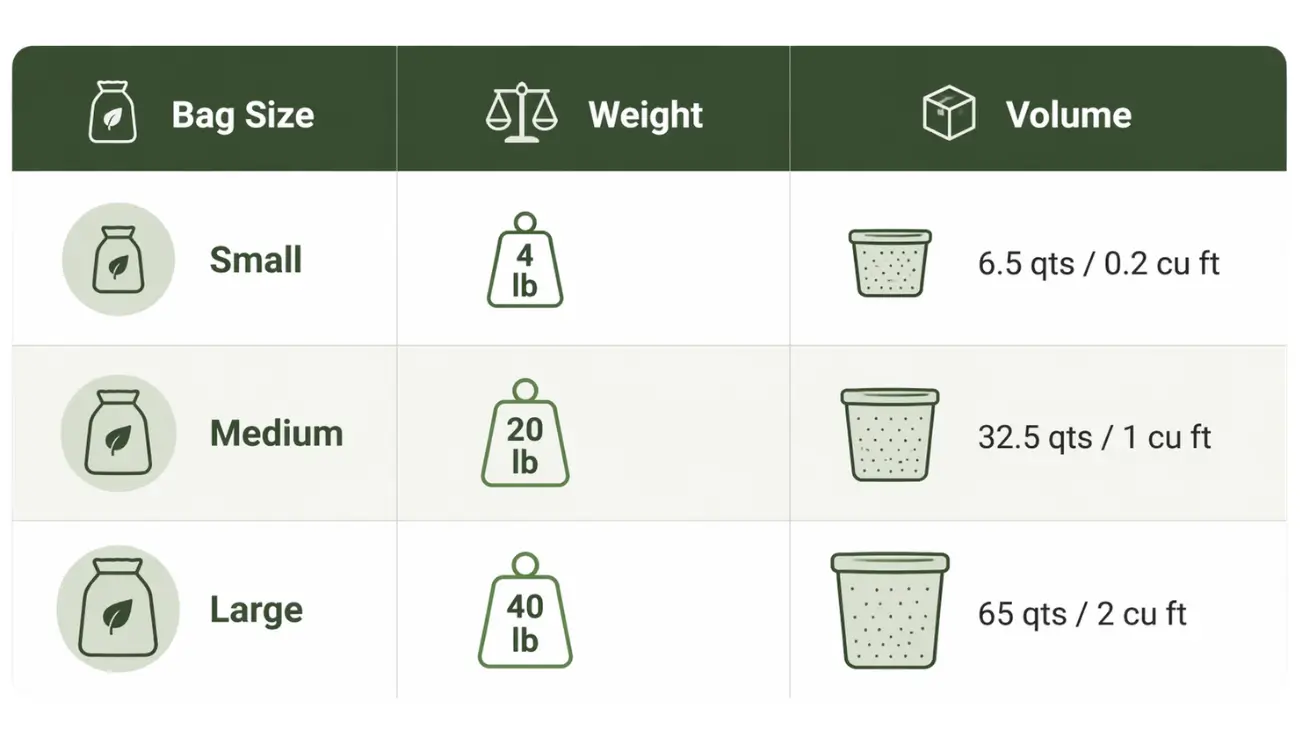
Our bags come in 3 sizes and knowing the weight of each bag is what connects the coverage rate to your order. Once you know how many pounds you need, you know which bag—or how many bags—to buy.
The Formula
For a rectangular or square planter: Length (ft) × Width (ft) × Depth (in) × 1.66 = lbs needed.
For a round planter: π × Radius (ft)² × Depth (in) × 1.66 = lbs needed.
If you're working in inches rather than feet, convert first: divide inches by 12 to get feet.
Most indoor planters call for a 1-inch application depth — enough to cover the soil surface cleanly and deliver the moisture and temperature benefits without burying the plant base. For very large floor planters or commercial installations where visual weight matters, 1.5 inches is reasonable. For small desktop pots, 0.5 inches may be sufficient.
Real-World Examples
Small Desktop or Windowsill Pot
8 inches × 8 inches surface, 1 inch depth
- Surface area: 0.67 ft × 0.67 ft = 0.45 sq ft
- Lbs needed: 0.45 × 1.66 = 0.74 lbs
- One small bag (4 lb) covers up to 5–6 pots this size
Standard Mid-Size Indoor Planter
12 inches × 12 inches surface, 1 inch depth
- Surface area: 1 ft × 1 ft = 1 sq ft
- Lbs needed: 1 × 1.66 = 1.66 lbs
- One small bag (4 lb) covers about 2 planters this size
Large Round Floor Planter
24 inch diameter, 1 inch depth
- Radius: 12 inches = 1 ft
- Surface area: π × 1² = 3.14 sq ft
- Lbs needed: 3.14 × 1.66 = 5.21 lbs
- One medium bag (20 lb) covers about 3–4 planters this size
Extra Large Statement Planter
36 inches × 36 inches surface, 1.5 inch depth
- Surface area: 3 ft × 3 ft = 9 sq ft
- Lbs needed: 9 × 1.66 × 1.5 = 22.41 lbs
- One large bag (40 lb) covers about 1–2 planters this size
Commercial Install—Hotel Lobby, 20 Planters
Average planter: 18 inches × 18 inches, 1 inch depth
- Surface area per planter: 1.5 ft × 1.5 ft = 2.25 sq ft
- Lbs per planter: 2.25 × 1.66 = 3.74 lbs
- Total for 20 planters: 3.74 × 20 = 74.7 lbs
- 2 large bags (80 lbs total) covers the install with a small buffer for touch-ups
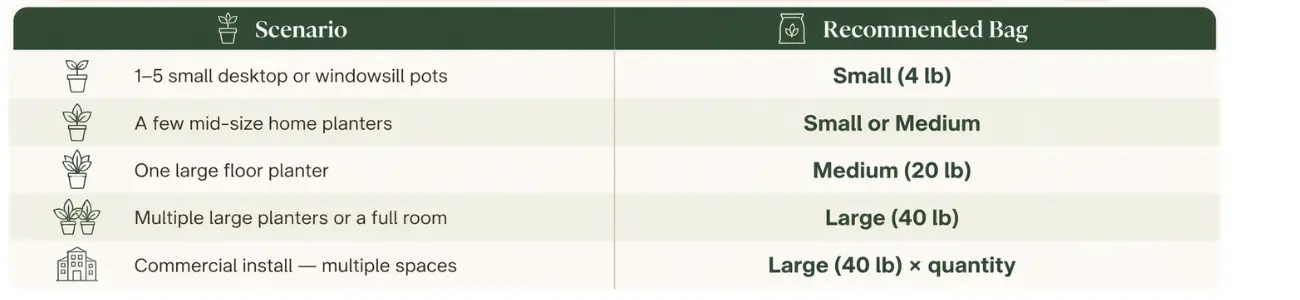
General rule: When you're between bag sizes, size up. It's far better to have a small amount left over than to run short mid-install. Leftover interior mulch stores well — keep the bag sealed in a cool, dry location and it will be ready for touch-ups or your next project.
know your project dimensions?
Use our interior mulch calulcator to determine exactly how much mulch you'll need and the recommended purchase quanities!
A Note for Commercial Plantscapers
When you're quoting a commercial project, build your mulch calculation into the spec from the start. Measure planter surface areas during your site walkthrough, apply the formula above, and add a 10–15% buffer for irregular planter shapes, spillage during application, and touch-up needs after the install settles.
For large projects—hotels, corporate campuses, retail chains—ordering by the large bag in bulk is the most cost-efficient approach. If you're working on a project where you need to confirm quantities before ordering, request a sample pouch first to confirm the product fits your spec, then calculate your full order from there.
Final Thoughts
Getting the quantity right before you buy saves time, money, and the frustration of a half-finished install. The math isn't complicated—surface area, application depth, and 1.66 lbs per square foot gets you to the right number every time. When in doubt, size up. A little leftover is an asset. Running short in the middle of a job is not.
Use the examples above as your reference point, bookmark this page for your next project, and if you're ever unsure—especially on a large commercial install—err on the side of one extra bag. The large bag gives you 40 lbs to work with, and at the standard 1-inch application depth, that covers a lot of ground.
FAQ
Q: Do I need to apply interior mulch at exactly 1 inch?
One inch is the recommended standard depth for most indoor planters. It's enough to cover the soil cleanly, deliver the moisture and temperature benefits, and present a finished appearance. For very small pots, 0.5 inches is fine. For very large statement planters where visual weight matters, 1.5 inches is reasonable. Going much deeper than that in a standard planter isn't necessary and will consume product without meaningful additional benefit.
Q: How do I measure an irregular-shaped planter?
For irregular shapes, break the surface into sections you can measure—rectangles, circles, or rough approximations—calculate each section separately, and add them together. For very irregular commercial planters, adding a 15% buffer to your total is a safe approach.
Q: Can I apply interior mulch over existing topdressing?
If the existing topdressing is clean and stable, a thin top-up layer is fine. If it's degraded, moldy, or infested, remove it first before applying fresh interior mulch. Starting clean gives you the full benefit of the pasteurized product.
Q: How often will I need to reorder?
Interior mulch is highly durable and resists decomposition indoors. In a well-maintained planter, a properly applied layer should last a long time before needing to be refreshed. Touch-ups are typically needed after repotting, watering disturbance, or if the layer has been thinned over time.
Q: Does the coverage rate change with different planter soil types?
No—the coverage rate is based on surface area and application depth, not soil type. The formula works the same regardless of what's in the planter below.
by Brandon Haas
Published on May 1, 2026
Unsubscribe anytime. By entering your email, you agree to receive marketing emails from Interior Mulch Scapes. By proceeding, you agree to the Terms and Conditions and Privacy Policy.
popular posts
INTERIOR MULCH
Should You Mulch Indoor Plants?
TIPS
How Deep Should Mulch Be?
INTERIOR MULCH
4 Tips to Begin Interior Landscaping
INTERIOR MULCH
What is Interiorscaping?
on this page
Mulch Your Interiors!
- Shop Now
This is the question that comes up every time—whether you're a professional plantscaper quoting a commercial install or a home enthusiast standing in front of a planter wondering which bag to grab.
How much mulch do I actually need?
The good news is it's a straightforward calculation once you know two things: the surface area of your planter and how deep you want to apply the mulch. This post gives you the numbers, the formula, and a set of real-world examples so you can walk into any project—one pot or forty planters—knowing exactly what to order.
The Core
Coverage Number
Everything starts here: 1.66 lbs of interior mulch covers 1 square foot at 1 inch depth.
That's your baseline. From that single number you can calculate coverage for any planter shape, any application depth, and any order size.
Our bags come in 3 sizes and knowing the weight of each bag is what connects the coverage rate to your order. Once you know how many pounds you need, you know which bag—or how many bags—to buy.
The Formula
For a rectangular or square planter: Length (ft) × Width (ft) × Depth (in) × 1.66 = lbs needed.
For a round planter: π × Radius (ft)² × Depth (in) × 1.66 = lbs needed.
If you're working in inches rather than feet, convert first: divide inches by 12 to get feet.
Most indoor planters call for a 1-inch application depth — enough to cover the soil surface cleanly and deliver the moisture and temperature benefits without burying the plant base. For very large floor planters or commercial installations where visual weight matters, 1.5 inches is reasonable. For small desktop pots, 0.5 inches may be sufficient.
Real-World Examples
Small Desktop or Windowsill Pot
8 inches × 8 inches surface, 1 inch depth
- Surface area: 0.67 ft × 0.67 ft = 0.45 sq ft
- Lbs needed: 0.45 × 1.66 = 0.74 lbs
- One small bag (4 lb) covers up to 5–6 pots this size
Standard Mid-Size Indoor Planter
12 inches × 12 inches surface, 1 inch depth
- Surface area: 1 ft × 1 ft = 1 sq ft
- Lbs needed: 1 × 1.66 = 1.66 lbs
- One small bag (4 lb) covers about 2 planters this size
Large Round Floor Planter
24 inch diameter, 1 inch depth
- Radius: 12 inches = 1 ft
- Surface area: π × 1² = 3.14 sq ft
- Lbs needed: 3.14 × 1.66 = 5.21 lbs
- One medium bag (20 lb) covers about 3–4 planters this size
Extra Large Statement Planter
36 inches × 36 inches surface, 1.5 inch depth
- Surface area: 3 ft × 3 ft = 9 sq ft
- Lbs needed: 9 × 1.66 × 1.5 = 22.41 lbs
- One large bag (40 lb) covers about 1–2 planters this size
Commercial Install—Hotel Lobby, 20 Planters
Average planter: 18 inches × 18 inches, 1 inch depth
- Surface area per planter: 1.5 ft × 1.5 ft = 2.25 sq ft
- Lbs per planter: 2.25 × 1.66 = 3.74 lbs
- Total for 20 planters: 3.74 × 20 = 74.7 lbs
- 2 large bags (80 lbs total) covers the install with a small buffer for touch-ups
General rule: When you're between bag sizes, size up. It's far better to have a small amount left over than to run short mid-install. Leftover interior mulch stores well — keep the bag sealed in a cool, dry location and it will be ready for touch-ups or your next project.
know your project dimensions?
Use our interior mulch calulcator to determine exactly how much mulch you'll need and the recommended purchase quanities!
A Note for Commercial Plantscapers
When you're quoting a commercial project, build your mulch calculation into the spec from the start. Measure planter surface areas during your site walkthrough, apply the formula above, and add a 10–15% buffer for irregular planter shapes, spillage during application, and touch-up needs after the install settles.
For large projects—hotels, corporate campuses, retail chains—ordering by the large bag in bulk is the most cost-efficient approach. If you're working on a project where you need to confirm quantities before ordering, request a sample pouch first to confirm the product fits your spec, then calculate your full order from there.
Final Thoughts
Getting the quantity right before you buy saves time, money, and the frustration of a half-finished install. The math isn't complicated—surface area, application depth, and 1.66 lbs per square foot gets you to the right number every time. When in doubt, size up. A little leftover is an asset. Running short in the middle of a job is not.
Use the examples above as your reference point, bookmark this page for your next project, and if you're ever unsure—especially on a large commercial install—err on the side of one extra bag. The large bag gives you 40 lbs to work with, and at the standard 1-inch application depth, that covers a lot of ground.
FAQ
Q: Do I need to apply interior mulch at exactly 1 inch?
One inch is the recommended standard depth for most indoor planters. It's enough to cover the soil cleanly, deliver the moisture and temperature benefits, and present a finished appearance. For very small pots, 0.5 inches is fine. For very large statement planters where visual weight matters, 1.5 inches is reasonable. Going much deeper than that in a standard planter isn't necessary and will consume product without meaningful additional benefit.
Q: How do I measure an irregular-shaped planter?
For irregular shapes, break the surface into sections you can measure—rectangles, circles, or rough approximations—calculate each section separately, and add them together. For very irregular commercial planters, adding a 15% buffer to your total is a safe approach.
Q: Can I apply interior mulch over existing topdressing?
If the existing topdressing is clean and stable, a thin top-up layer is fine. If it's degraded, moldy, or infested, remove it first before applying fresh interior mulch. Starting clean gives you the full benefit of the pasteurized product.
Q: How often will I need to reorder?
Interior mulch is highly durable and resists decomposition indoors. In a well-maintained planter, a properly applied layer should last a long time before needing to be refreshed. Touch-ups are typically needed after repotting, watering disturbance, or if the layer has been thinned over time.
Q: Does the coverage rate change with different planter soil types?
No—the coverage rate is based on surface area and application depth, not soil type. The formula works the same regardless of what's in the planter below.